Our R&D for medical language
PraxySanté develops AI models for understanding the conversations and medical language used in products that are easily accessible to healthcare professionals and to accelerate clinical research.
Language analysis technologies (NLP, neural networks, deeplearning and then LLM) have developed significantly over the past 15 years and are now maturing to build products that provide a useful, reliable and secure service to healthcare professionals.
Our R&D works on these main objectives:

1. Ultra-precise speech-to-text models for the medical field and a high repeatability of summaries generated by LLM
Praxy.ai trains its own speech-to-text models on all medical vocabulary by language, i.e. over 170,000 medical terms, for which we have created nearly 15,000 hours of medical audio
"Large language models" are particularly well-suited for summarising long texts or conversations. However, their results are not natively precise, repeatable, and not in the expected format. Our R&D develops best practices for retraining and controlling results to ensure reliable results over time and continuous improvement
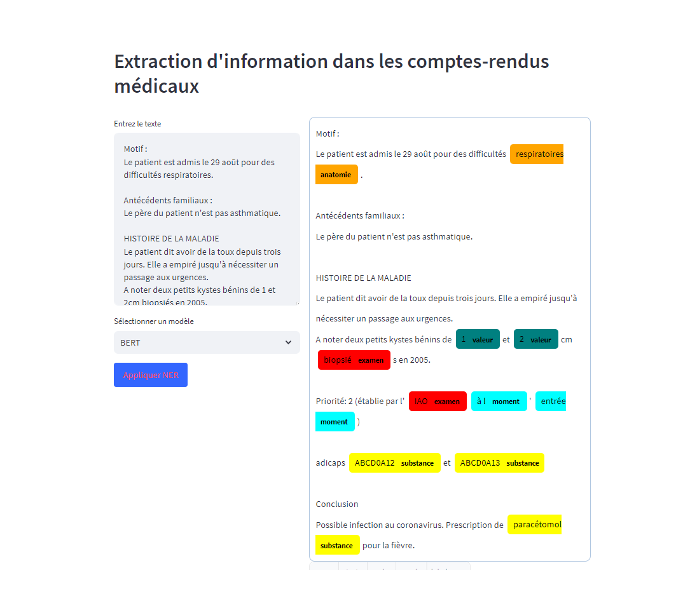
2. The extraction of structured data from medical language and automatic coding (CIM, LOINC, SNOMED, CCAM, OMOP, ..)
To connect care and real-life studies.

3. The use of language models in our infrastructure
To ensure HDS compliance, with optimised operating costs, we invest in the optimisation of large language models for audio transcription and text analysis, databases
Discover our scientific articles
To learn more about the models developed by Praxy.ai
Anti-hallucination system to guarantee the factual accuracy of IA-generated medical records
CORIA TALN best paper award and published in ACL Anthology
ASR_T5_hybrid_dual_encoder_model_publication.pdf
ASR-LLM Hybrid Dual Encoder for High-Precision Medical Speech Recognition
A multidisciplinary team from Healthcare, AI, and software consulting and development

Damien Forest, CEO & CTO
Damien has a 15-year track record in tech startups, consulting, and industry, notably marked by the development of an autonomous robotics company (Rovenso), the management of a WaterTech company's operations (Castalie), and more recently the transformation of a Business Unit in Healthcare services (La Poste Santé & Autonomie).

Nadège Alavoine
AI Tech Lead
Expert in natural language processing with a medical background, Nadège is the architect of several of our AI models

Benoit Fage,
Full Stack Engineer, Lead Back End
Benoit is passionate about technology and has experience in software development in the energy and cybersecurity sectors.
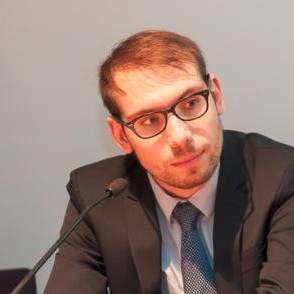
Julien Paul Vedani,
Patient Relations Advisor
Doctor of Mathematics and Actuary, Julien is also the president of a patient association for those affected by MS. He holds a degree in Healthcare Democracy - Medication - Patient Partnership, and helps us in the design of products involving patients
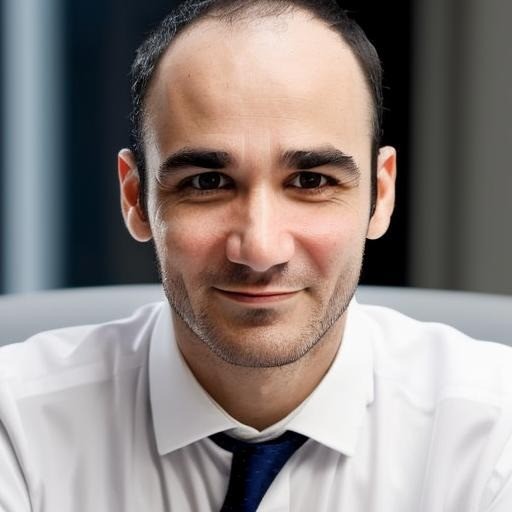
Mikael Chelli, Orthopaedic Surgeon, Co-Product Owner
Mikael is both a practitioner (orthopaedic surgeon and traumatologist) at the ICR, and the founder of the startup Easymedstat which facilitates clinical research work.
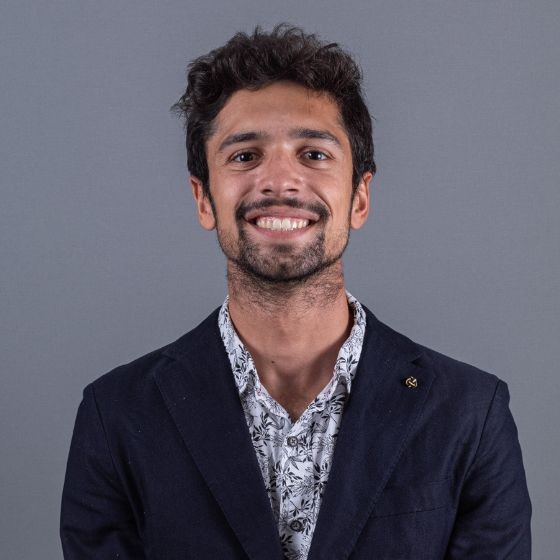
Jorge Korgut, Full Stack Engineer
Jorge is very versatile and develops our applications for mobility and video conferencing

Ons Aouina
AI Scientist
Her Postdoctoral research focused on improving psychiatric care by accurately identifying and tracking mental health patient information in medical reports using semantic annotation
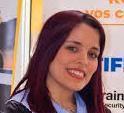
Souhir Khessiba
AI Scientist
Research scientist and Doctor of Computer Science and Technology, specialising in artificial intelligence, signal processing and hyperparameter optimisation for deep learning networks applied to biomedical signals, with particular attention to the analysis of EEG and spatio-temporal signals related to knee arthritis and Parkinson's disease.

Rashedur Rahman,
Senior AI Scientist
Augustin is versatile and specialises in front-end development, with successful experiences in the development of autonomous robot control software, or energy efficiency pilot solutions